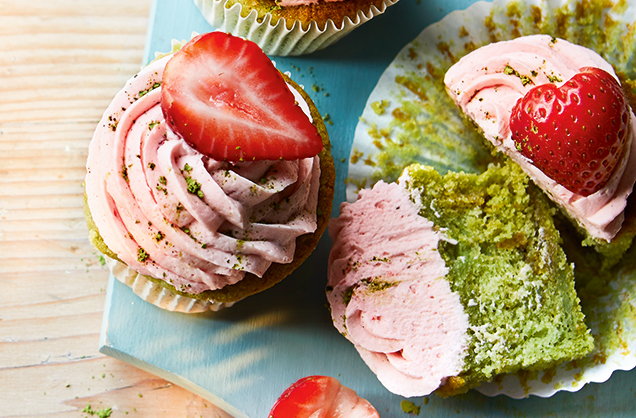
What is matcha?
What is matcha, exactly? It is a vibrant ground powder made from finely ground, shade-grown green tea leaves. Unlike regular green tea, where you steep and discard the leaves, matcha involves consuming the whole leaf. It’s typically combined with hot water to make matcha tea or milk to make a matcha latte.
Matcha tea: Matcha powder is whisked into hot water with a special bamboo whisk, called a chasen, until it becomes smooth with a delicate froth on top. This is the ‘purest’ way to drink matcha and take in all of its earthy flavour.
Matcha latte: Matcha powder is whisked with a small amount of warm water to make a ‘matcha shot’ in the bottom of the mug, then topped up with frothed or steamed milk. As with a coffee latte, the milk adds a natural sweetness to counter the more bitter notes of the matcha. You can also buy pre-mixed match latte powders and readymade matcha latte drinks.
Iced matcha latte: Here the ‘matcha shot’ is poured into a glass filled with ice and cold milk. This is considered the most beginner-friendly way to drink matcha, as you can experiment with a variety of sweeteners and syrups until you are accustomed to the taste.
The history and origin of matcha
The word matcha comes from a combination of the Japanese words matsu (to rub) and cha (tea). But, while we might think of it as being a traditionally Japanese drink, the story of matcha began thousands of years ago in ancient China during the Tang Dynasty (7th-10th century). Back then, green tea leaves were steamed and pressed into bricks for easy transport before being roasted and ground into powder.
What is inside matcha?
Looking at the electric green colour, you might wonder: what is matcha made of? And how is matcha different from green tea?
While both come from the green tea plant Camellia sinensis, the secret is in the specialised growing and production process.
Matcha vs green tea
Matcha: Tea bushes are shielded from sunlight for 20-30 days before harvest. The shade triggers an increase in chlorophyll, which turns the leaves a darker shade of green and increases the production of L-theanine, the amino acid responsible for matcha’s signature sweet, umami flavour. The harvested leaves are steamed, air-dried, de-veined and de-stemmed and then stone-ground whole into a fine powder.
Green tea (sencha): These leaves are grown in the sun right up until they are picked. This results in a duller colour and a more bitter taste. The harvested leaves go through multiple stages of steaming, rolling and drying until they resemble the tea you can buy in store.
Another key difference lies in how you prepare and drink each tea. With standard green tea, you steep the tea bag or loose leaves in water and then discard them, however, with matcha powder, you whisk the whole ground leaves directly into your drink. As a result, you consume the entire leaf (rather than just the infused green tea water).
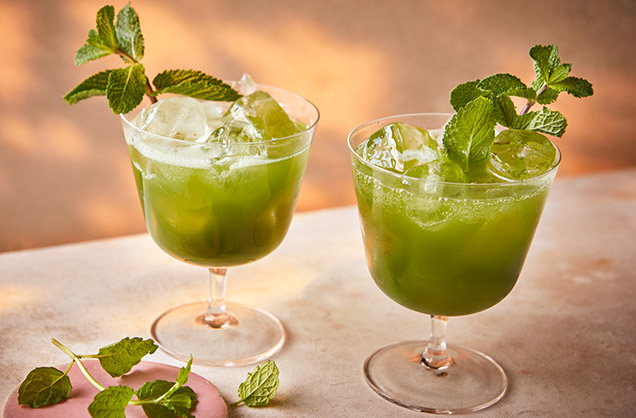
What does matcha taste like?
Pure matcha tea has a slightly nutty, grassy flavour with a rich ‘umami’ undertone and a hint of bitterness. Because it can be an acquired taste, many popular drinks combine matcha with complementary flavours. If you find the taste ‘too green’ or ‘grassy’, try pairing it with vanilla, blueberry, strawberry, honey or even sea salt to balance the earthiness.
How to make a matcha latte at home
Making a matcha latte at home is part science and part ritual. To get that vibrant green colour and smooth, non-bitter taste, the most important thing to remember is to never use boiling water, as it scorches the delicate powder. You don’t need special equipment to make a good cup of matcha. A cup, a teaspoon, and a small whisk will do just fine.
Here’s the best method to achieve a café-quality matcha latte in your kitchen:
- Sift the matcha: Matcha is prone to clumping. Sift 1 tsp of powder through a fine-mesh strainer into a wide bowl or mug. This ensures your latte will be silky rather than grainy.
- Create a ‘matcha shot’: Add a tablespoon of hot (not boiling) water to the powder (80°C is ideal). Use your whisk or electric frother to mix it into a thick, smooth paste.
- Whisk until frothy: Add another 60ml of hot water. If using a bamboo whisk, whisk vigorously in a ‘W’ or ‘M’ motion (not circular) for 30-60 seconds until a thick layer of bubbles forms on top. If using an electric frother, tilt the mug and froth until aerated.
- Heat and froth the milk: If you have a milk frother, use that to froth 150-200ml of milk. If not, heat your milk in a pan or microwave until steaming but not boiling. Then use your electric frother to create a light, creamy foam.
- Combine: Pour your whisked ‘matcha shot’ into a glass, then slowly pour the frothed milk over the top.
Troubleshooting: Why is my matcha bitter?
If your matcha latte tastes overly bitter, it is usually due to one of three things:
- Water was too hot: Anything over 80°C could burn the leaf powder.
- Low-quality powder: Lower-grade culinary matcha can sometimes create an unpleasant, chalky mouthfeel.
- Too much powder: Start with a level teaspoon and adjust from there.
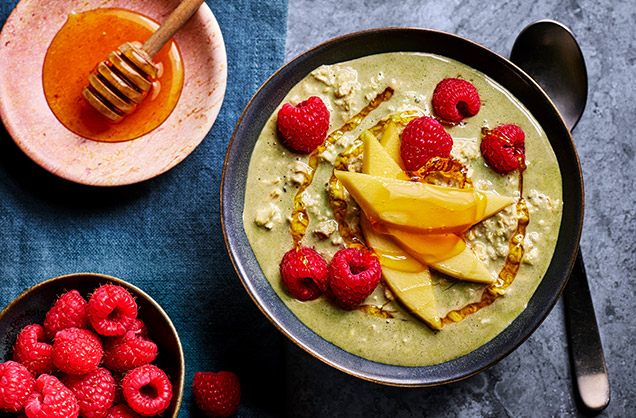
How to use matcha: 4 delicious and easy recipes to try
If you aren’t in the mood for a matcha latte, you can blend a teaspoon of matcha powder into your morning smoothie or add it to baked goods like cookies, brownies, or cupcakes for a stunning pop of colour and a subtle earthy flavour.
Put your powder to work with these favorites:
Where can I buy matcha?
You can find matcha in store or online. Matcha powder can be found in the tea and coffee aisle or ready-to-drink matcha cans and chilled drinks can be found either in the milk aisle or the food-to-go aisle.