What is halloumi?
Halloumi is a semi-hard, unripened brined cheese originating from Cyprus. Made from a mixture of sheep’s milk, goat’s milk and occasionally cow’s milk, it is distinguished by its high melting point, which allows it to be grilled, pan-fried, or barbecued without losing its shape.
Did you know? In 2021, halloumi was granted PDO (Protected Designation of Origin) status by the EU, which means that only cheese produced in Cyprus according to specific traditional methods can be legally called ‘halloumi’.
What is halloumi made of?
Halloumi is made from simple, traditional ingredients – primarily a combination of sheep’s and goat’s milk (and occasionally cow’s milk).
What is in halloumi cheese?
Beyond the milk, halloumi contains three essential components:
- Rennet: An enzyme used to set the cheese. While traditionally animal-derived, most halloumi now uses vegetarian rennet instead.
- Salt: Halloumi is brined in salt water, which gives it that salty flavour and preserves it for longer shelf life.
- Dried Mint: The small flecks visible in a block of halloumi cheese are dried mint. This is a nod to the tradition of wrapping the cheese in mint leaves to help preserve it before pre-refrigeration.
How to cook halloumi
Knowing how to cook halloumi well is the secret to enjoying it at its best. Whether you are pan-frying, grilling, baking or air-frying, the goal is a golden-brown crust. Halloumi is best eaten immediately while the center is still gooey, as it cools, it becomes slightly tougher and more rubbery.
4 simple ways to cook halloumi
- Pan-frying: Slice the cheese into 1cm thick slices and fry in a dry nonstick pan over medium-high heat for 2-3 minutes per side until crisp and bubbling.
- Grilling or barbecuing: Brush slices with a little olive oil and place them directly on the grill for a subtle smoky flavour.
- Baking: For a simple, hands-off approach, try baking halloumi in the oven. It works beautifully with a drizzle of honey and a sprinkle of chilli flakes for a sticky, sweet-savoury finish.
- Air-frying: For maximum crunch with less oil, toss halloumi cubes into the air-fryer. Heat at 200°C for about 8-10 minutes, shaking halfway through until they are evenly browned.

Delicious halloumi recipe ideas
Classic comfort food swaps
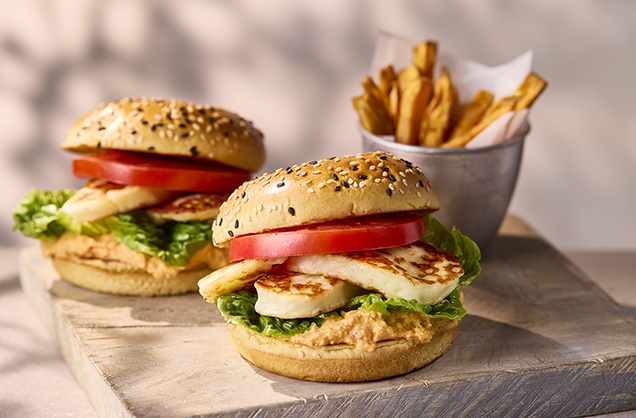
Knowing the best ways to cook halloumi allows you to create vegetarian versions of takeaway favourites, from juicy halloumi burgers to crispy halloumi fries. This humble cheese works brilliantly threaded onto kebabs and skewers for the BBQ, and you can even use it to create a veggie alternative to ‘pigs in blankets’ for the festive period.
The ultimate salad star
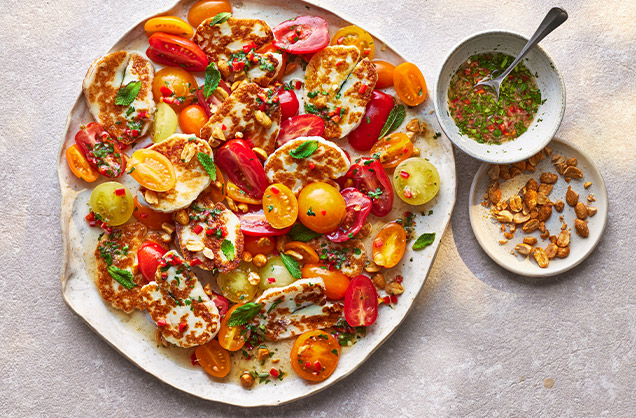
Halloumi adds a warm, satisfying element to a salad, and can turn any side dish into a main event, perfect for mid-week lunches. Use it to add a salty crunch to a fresh halloumi and chickpea salad or a tabbouleh. The cheese also pairs beautifully with earthy roasted vegetables in a spiced squash and halloumi salad. Or, for something more adventurous, try this Thai-inspired tomato and halloumi salad, served with a punchy lime and chilli dressing.
That’s a wrap!
Level up your dinners with piri-piri halloumi pittas or tangy halloumi fajitas. For a sweet-savoury kick, you won’t find a better combo than these hot honey halloumi flatbreads.
Perfect pairings
In its homeland of Cyprus, halloumi isn't just for souvlaki; it’s frequently enjoyed with fresh fruit. This traditional sweet-and-salty contrast is incredibly refreshing, making it the perfect base for vibrant summer dishes. For your next party, opt for a classic pairing like dukkah-crusted halloumi and watermelon skewers, layer it with slices of nectarine for a zingy citrus salad, or try the unique combination of cherry and hot honey halloumi skewers.
Halloumi questions, answered
Can you eat halloumi raw?
Yes, you can eat halloumi raw. Halloumi is perfectly safe to eat straight from the packet without cooking. In fact in Cyprus, uncooked halloumi is often served with watermelon or grapes in the summer months. Generally, however, it is much more enjoyable when served cooked.
Is halloumi vegan?
No, traditional halloumi cheese is not vegan. Because it is a dairy cheese produced from sheep’s and goat’s milk, it is unsuitable for those on a plant-based diet. You can, however, buy 100% plant-based ‘halloumi-style’ alternatives.
Is halloumi vegetarian?
While most halloumi sold in the UK is vegetarian, not all traditional halloumi is. Some brands use animal rennet to set the cheese. To be safe, always check the packaging for a ‘suitable for vegetarians’ label before you buy.
Does halloumi have lactose?
Yes, halloumi contains lactose. If you have an intolerance to lactose, look for specifically labelled ‘lactose-free’ halloumi alternatives.
Can you freeze halloumi?
Yes, you can freeze halloumi. It freezes very well due to its firm low-moisture texture. It can be kept in the freezer for 2-6 months.
How to store halloumi
The most effective way to store leftover halloumi and stop it from drying out is to create your own brine. Simply place the leftover cheese in an airtight container and submerge it completely in a mixture of cold water and a generous pinch of salt. This mimics the traditional packaging process and keeps the cheese firm and moist in the fridge for up to two weeks.
Where can I buy halloumi?
You can find halloumi in store or online. Halloumi can be found in the cheese aisle, alongside feta and mozzarella.