What is weaning?
Weaning means introducing your baby to solid foods, sometimes it’s called complementary feeding. Learning to eat is a brand-new skill for your baby, and it can take a little time – but it’s also a wonderful and exciting milestone in their development.
When should I start weaning?
Around 6 months is the ideal time to start solids, here’s why it’s best to wait until this age:
- Breast milk or first infant formula gives your baby all the energy and nutrients they need until they’re around 6 months (with the exception of vitamin D in some cases).
- Exclusively breastfeeding until roughly 6 months offers extra protection against infections and illnesses.
- Waiting until this stage allows your baby to mature enough to manage solid foods confidently, including purées, cereals and baby rice mixed with milk.
- By 6 months, most babies are more ready to explore food independently, making the transition smoother and safer.
- Your baby should also be better at chewing and swallowing, helping them handle a wider range of textures like mashed, lumpy or finger food.
How will I know if my baby is ready for solid foods?
‘As a general rule, most babies are ready to start solids at around six months of age, but it’s their developmental milestones, not just their age, that really signal readiness,’ explains children’s dietitian Lucy Upton. ‘Remember, each baby will reach these milestones in their own time. Here’s what to look out for:
- Your baby can sit upright unaided for a short time and keep their head upright and steady.
- Your baby can coordinate their eyes, hands and mouth, meaning they can see an object, pick it up and bring it to their mouth.
- Your baby’s tongue thrust reflex has started to disappear – young babies have a safety reflex that means their tongue automatically pushes out (‘thrusts’) any foreign objects in their mouth. To commence solids, your baby should be able to keep some food in their mouth to swallow, rather than automatically pushing it back out with their tongue.
‘There are many myths about when to wean your baby that still do the rounds! Some of these include starting because your baby wants more milk, may be waking overnight, seems “hungry” or is bringing their hands or fists to their mouth regularly. None of these are considered developmental signs baby is ready for weaning. Curiosity about your food and others eating is also a great sign that your baby is getting interested in food, but it is also not considered a developmental green flag for starting solids.’
How do I start weaning?
In the early days of weaning, your baby will only need a tiny amount of food, just before their normal milk feed. They will still rely on breast milk or infant formula for most of their nutrition at this stage, so think of these first tastes as fun, low-pressure introductions rather than full meals.
While the temptation may be to follow a baby weaning schedule, try not to focus on how much actually goes in. Right now, it’s all about gently introducing new flavours and textures, and helping them practise moving food around their mouth and swallowing safely.
How often should I feed my baby? How much will they eat? And how much milk should they have?
From around 6 months
- When your baby first starts solids, they won’t need full meals – their tummy is still tiny. Begin with just a few spoonfuls or small pieces of food at a time.
- Try offering solids before their usual milk feed so they’re not too full, but don’t leave it until they’re really hungry and potentially irritable either!
- Breast milk or infant formula will still provide most of their nutrition throughout the first year and should remain their main drink. Avoid using whole cow’s, goat’s or sheep’s milk as a main drink until after they turn one.
- You can carry on breastfeeding for as long as it suits you both. First infant formula is the only suitable alternative if you do not breastfeed or if you want to give your baby some formula milk alongside your breast milk. Once your child turns one, formula milks are not needed (this includes first infant formula, follow-on formula, growing-up milks and other toddler milks) but you can carry on breastfeeding for as long as it suits you both.
- From around six months, offer sips of water with meals in an open cup or a free flow cup to help them learn to sip and support healthy teeth.
From 7-9 months
- From around 7 months, your baby will start working towards 3 mini meals a day – breakfast, lunch and dinner – alongside their usual milk feeds. Many little ones still have around four milk feeds daily.
- As they begin eating more solids, they may naturally take less milk at each feed or even drop one.
- If you’re breastfeeding, your baby will naturally adjust how often they feed based on how much they’re eating. As a rough guide, formula-fed babies may take around 600ml a day at this stage.
From 10-12 months
- By around 10 months, your baby weaning plan will likely include 3 meals a day alongside your baby's usual milk feeds.
- Many little ones have around 3 milk feeds daily, such as after breakfast, after lunch and before bedtime.
- Breastfed babies naturally adjust how much milk they take as they eat more solid food. Formula-fed babies usually have around 400ml a day at this stage.
- All breastfed babies should have a daily vitamin D supplement from birth (8.5 to 10 micrograms (µg) of vitamin D), the same applies to babies having less than 500ml (about a pint) of formula per day.
From 12 months
- At this stage, your little one will be enjoying three balanced meals a day with plenty of variety. They might also like two healthy snacks such as carrot and cucumber sticks, slices of apple and banana, sticks of cheese, or plain, unsweetened full-fat yogurt.
- You can keep breastfeeding, but your child will naturally need less breastmilk. At this stage, formula milk is not required, just offer pasteurised whole cow’s milk (or unsweetened calcium-fortified milk alternatives apart from rice milk).
What is baby-led weaning? Should I try it?
Baby-led weaning means offering only finger foods and letting your little one feed themselves from the start instead of using purées or spoon-feeding. See our 'Finger foods' section, below for some baby-led weaning first foods.
If you like the idea, but want to offer purées too, you can do a mix of both spoon-feeding and finger foods. There’s no right or wrong method! The key is to provide a variety of food, flavours and nutrients.
How messy is too messy? Should I let my baby play with food all the time?
'There is no limit to mess during weaning,' says Lucy. 'What can look like 'playing' with foods is actually an important part of exploratory learning and skill development. Eating is a big sensory task, and touching, squishing and smearing help babies learn about texture, temperature and smell. Hands-on exploration also helps your baby develop fine motor skills, confidence and self-feeding skills.
'Whilst it can be tempting to leap in and wipe faces or hands between mouthfuls, or to do your best to minimise the clean-up, I'd encourage parents to lean into this (messy) learning. It won't be like this for too long!'
What can I feed my baby?
What are the best flavours to introduce at the start of weaning?
'There's some evidence that introducing solids with more bitter flavours, such as green vegetables, can encourage acceptance of vegetables and similar flavours later on,’ says Lucy.
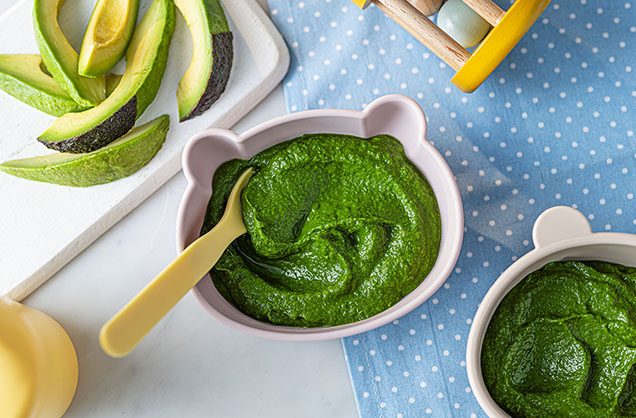
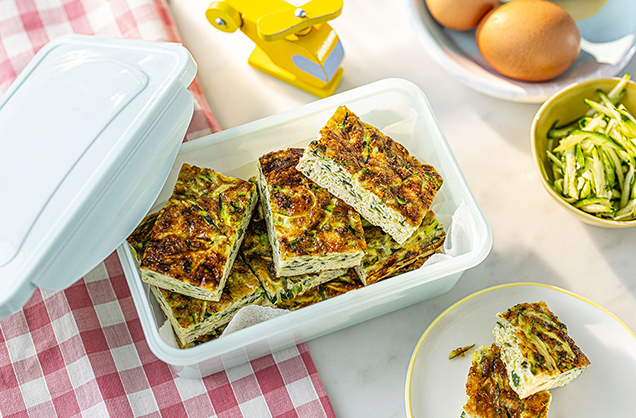
'For this reason, it can be helpful to include foods like broccoli, courgette, avocado or peas as part of your baby's early weaning journey.
From there, you can diversify to include more savoury and mild flavours from different root vegetables, starchy foods, beans and legumes, savoury flavours like cheese, eggs, meat, or fish (see the 'What are allergens?' section for more info), herbs, spices and sweeter foods like fruit.
It's likely that your baby will find sweeter foods, such as fruit or root vegetables more familiar, as breast and formula milk are sweet but it's important to include vegetables that are not sweet to get them used to a range of flavours.'
First foods (from around 6 months)
- Start with simple veggies and fruits, mashed or soft-cooked sticks. Include vegetables that are not sweet, such as broccoli and cauliflower, as well as sweet veg like carrot and parsnip for flavour variety.
- Remember, babies don’t need salt or sugar added to their food.
- Let cooked food cool completely before serving.
- Cow’s milk is fine in cooking from 6 months, just don’t offer it as a main drink until they’re one. Cow’s milk is an allergen, see our ‘What are allergens?’ section, below for more info. Full-fat dairy is also suitable from 6 months, choose unsweetened yogurt and fromage frais.
Finger foods
Encourage your baby to explore food with their hands – let them try feeding themselves, as it supports fine motor skills and hand-eye coordination.
Offering finger foods is a great way for little ones to discover new textures too, just remember pieces should be big enough for them to grip with a bit sticking out and make sure the food is soft (avoid hard food like raw carrot and apple).
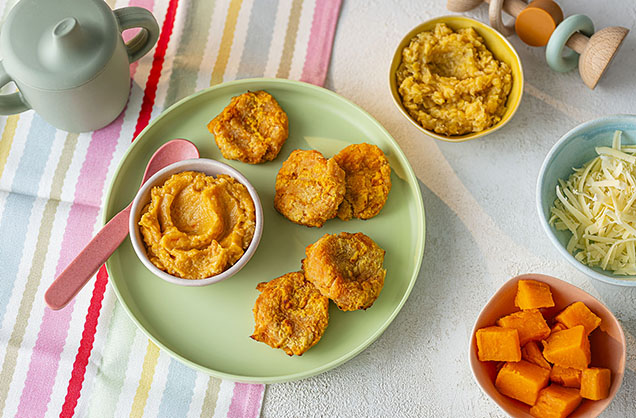
To start with, you could try soft-cooked veg, such as broccoli florets, or try pieces of avocado. This sweet potato and lentils recipe can be shaped into balls and baked. Once cooled, serve as a tasty finger food.
From 7-9 months
When your baby is having 3 mini meals a day, try to include an iron-rich food in each meal such as meat, fortified cereals, lentils and dark leafy veg.
Introduce more mashed, lumpy and finger foods at this stage to get your baby used to self-feeding, biting, chewing and swallowing soft pieces.
Offer a good mix of:
- Fruit and veg
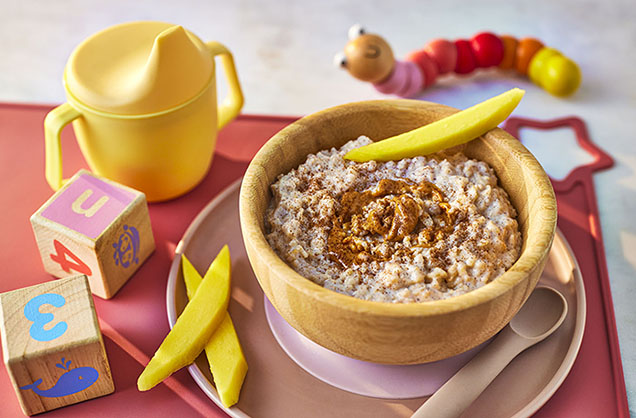
- Starchy foods, like potato, bread, rice, pasta and oats. This tropical porridge with mango makes a fab breakfast and will introduce your little one to new flavours and textures.
- Protein foods, like beans, pulses, fish, eggs and meat. Our mini fish cakes make an ideal lunch, dinner or meal on the go for babies from around 7-9 months.
- Full-fat pasteurised dairy, like plain yogurt and cheese. These banana pancakes served with yogurt make a tasty breakfast.
From 10-12 months
Hopefully at this stage, your baby should be enjoying lots of different tastes and textures. Lunches and dinners can include a main course and a fruity or unsweetened dairy dessert. This chicken pie is a suitable for this stage of weaning, but it makes a great family meal too. Remember, babies still don’t need salt or sugar added to their food.
From 12 months
Here’s what a typical day’s food intake should ideally include (don’t stress if some days don’t go to plan):
- At least 4 servings of starchy food (bread, rice, pasta etc). Why not try making your own wholemeal wraps? Containing just two ingredients, they’re so easy to make and low in salt.
- At least 4 servings of fruit and veg
- Minimum 350ml milk or 2 servings of dairy/dairy alternatives
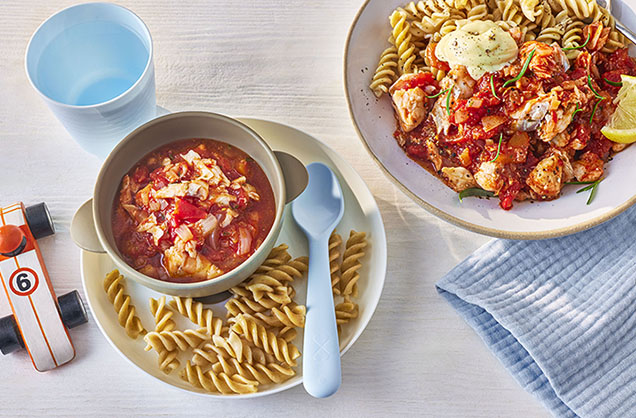
- 1 serving of animal protein (meat, fish, eggs) or 2 servings of veg protein (dhal, beans, lentils etc). Introduce your little ones to new flavours with this gently spiced fish stew.
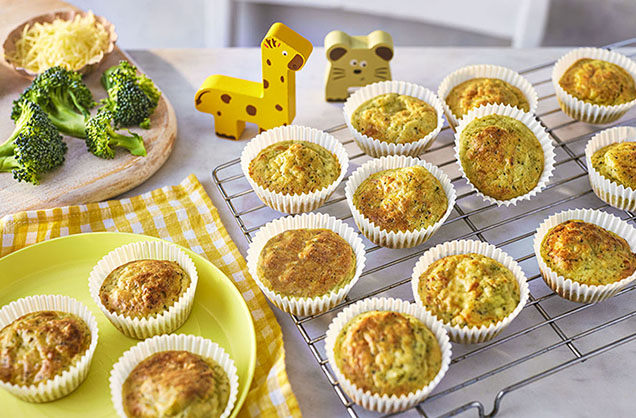
- Include 2 healthy snacks in between meals, if needed, such as fruit slices, veg sticks, plain yogurt, pitta bread fingers or sticks of cheese. These cheesy broccoli muffins make a great savoury snack or, for something sweeter, this microwave apple flapjack is super-easy to make and stores well.
Do I have to make everything from scratch?
‘Home-cooked baby food is a fantastic way to include a variety of flavours and nutrient-dense meals,’ says Lucy. ‘Home cooking also helps you better control texture progression. That said, cooking from scratch can be time-consuming, which is why many families find batch-cooking helpful.
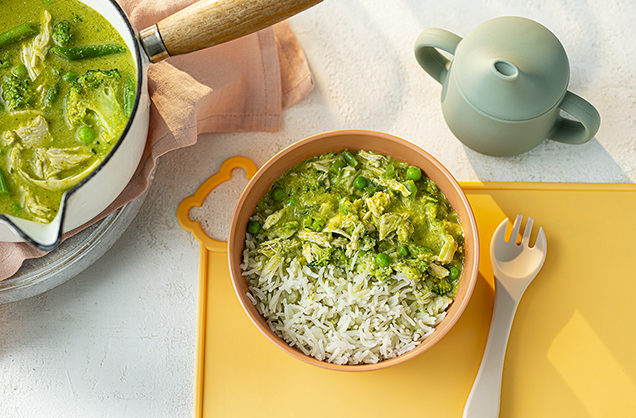
‘Batch-cooking lets you prepare multiple portions of a meal at once, which can then be frozen and quickly defrosted and reheated on busy days. You can use ice cube trays or larger silicone cube trays to store individual portions for ease, which also lets you mix and match options as you begin to build balanced meals. Try this freezable Thai chicken curry, suitable from around 10-12 months.
‘As your baby progresses through weaning, you may find it easier to adapt family meals so they can enjoy them alongside the rest of the family. Making small swaps, such as avoiding salt during cooking or setting aside a portion for your baby before seasoning, can make family meals more baby-friendly. This simple cheesy fish pie is suitable for babies from around 10-12 months, but all the family will enjoy it.
‘For some families, pouches or pre-prepared baby foods can also have a place when convenience is key, or when you’re travelling, for example. It’s best to use these thoughtfully and only occasionally, whenever possible, in line with NHS recommendations. If you plan to use these with your baby, avoid letting your baby suck directly from the pouch. Instead, squeeze the food onto a spoon before feeding it to them.’
How long can I store homemade baby food and can I freeze it?
- Cool cooked food as soon as possible and store it in the fridge, in a suitable airtight container, for up to 2 days.
- Yes, you can freeze most homemade baby food but plan ahead, as it should be thoroughly defrosted before reheating – this is best done in the fridge overnight.
- Reheat food until it’s piping hot all the way through, but let it cool down before giving it to your baby.
Find more food safety tips in this NHS guide.
What foods should I avoid?
Here are a few foods you should avoid giving your baby:
- Salt – Babies need very little salt, so don’t add it to your cooking and don’t use stock cubes. Avoid salty foods, such as bacon, sausages, crisps etc
- Sugar – Babies don’t need sugar added to foods, so skip the sugary snacks and fruit juice
- Saturated fat – Keep foods like crisps, biscuits and cakes to a minimum
- Honey – Avoid honey until they’re one-year-old
- Whole nuts – these pose a choking risk, but smooth nut butter is fine (see ‘What are allergens’ section, below)
- Unpasteurised and soft mould-ripened cheeses, such as Brie and Camembert
- Raw eggs
What are allergens? How and when should I introduce them?
Allergens are foods that can trigger allergic reactions. When you start weaning, introduce them one at a time and in very small amounts so you can monitor and pinpoint any reaction.
Introduce them as you would any other food, at the right stage of weaning. If your baby tolerates them, keep offering these foods regularly to help reduce the risk of allergies developing.
Allergens include cow’s milk, eggs, foods that contain gluten (such as bread), nuts and peanuts, seeds, soya and fish. You can find a more detailed list in this food allergies guide.
If your baby already has a diagnosed allergy or if allergies run in the family, take extra care when introducing new foods. Speak with your GP or health visitor first.
How can I keep my baby safe during weaning?
- The most important thing to remember is to always stay with your baby while they eat.
- To minimise the risk of choking, avoid hard foods and remove any pips, stones and bones. Also, cut foods like grapes and cherry tomatoes into small pieces lengthways. This NHS guide has lots of useful safety tips on how to cut and serve different foods for little ones.
- You’ll need a highchair with a safety harness, so your baby can sit safely in an upright position and swallow properly.
- Always wash your hands before preparing food and check your baby’s hands are clean before mealtimes.
Is it normal for my baby to gag a lot?
‘Gagging during weaning is something all parents should prepare for, especially in the first few weeks of starting solids,’ explains Lucy. ‘Whilst it can be difficult to watch, gagging is a normal, protective reflex that helps babies learn to manage food and eat safely.
‘Signs your baby is gagging on food include, making loud noises, their tongue pushing forward, food coming back out of their mouth, going red or having watery eyes. Your baby should recover on their own within a few seconds, whilst continuing to breathe and make noise. If your baby is gagging, avoid intervening or trying to take food out of their mouth, as this can increase the chance of choking. Whilst it can be difficult, allow your baby to work it out themselves whilst giving plenty of reassurance.
‘Gagging is very different to choking, and knowing the difference is important. Find more information on choking and how to prevent it here.’
Weaning worries
Weaning can bring a few wobbles along the way, and that’s completely normal and to be expected. To help, Lucy is here to answer common questions and concerns and offer some practical tips and baby weaning ideas.
My baby doesn’t seem interested in food, what can I do?
‘Many parents are concerned when their baby shows little enthusiasm for solids, especially in the early stages of weaning. This is actually very common and usually not a cause for concern. Weaning is a process of learning to eat (and eating is a pretty big skill to learn; it takes time!). It’s also normal for interest in solids to vary from day to day but even if they are not eating the food, they can still learn and build familiarity by touching, smelling, squishing and exploring foods.
‘To support interest and curiosity around food, here are some suggestions:
- Check in on milk feeds and meal timings – allow at least half-an-hour between milk feeds and offering food. Try to pick a time when your baby is settled and alert.
- Babies learn by mirroring (modelling and copying from others around them). You’re a fantastic teacher for your baby, so wherever possible, try to eat with them and show them what to do.
- Keep as relaxed as possible around meals. Stress and eating don’t mix well, so keep mealtimes fun, relaxed and responsive (by paying attention to your baby’s cues and behaviour).’
I feel like my baby barely eats anything, should I be worried they’re not getting enough nutrients?
‘I know many parents worry about this during weaning, and my first reminder is that a child’s milk, be that breast and/or formula milk, will continue to do a lot of the nutrition ‘heavy lifting’ for several months as your baby progresses with solids.
‘Many babies will only manage small tastes and portions whilst they get to grips with solid food. Following your baby’s lead about how much they want to eat, rather than focusing on specific volumes, can help set them up for positive experiences with food and mealtimes.
‘For additional peace of mind around nutrition, I would also recommend focusing on making your baby’s meals as nutrient-dense as possible. Once your baby is eating meals, focus on building them around a balance of iron-rich foods (like meat, oily fish, eggs, beans, soya), healthy fats (olive oil, avocado, full-fat dairy, seeds or smooth nut butters), starchy foods (potatoes, pasta, oats, grains) and a variety of fruits and veg.'
What if family members don’t agree with how I’m weaning?
‘Feeding can be an emotive topic, and family members may be keen to offer tips and advice. Whilst this usually comes from a good place, it can feel overwhelming or may even undermine your confidence when feeding your baby.
‘It can be helpful to remember and share that guidance on starting solids has evolved over time as new evidence and understanding of baby nutrition and feeding have emerged. You may find it helpful to set gentle boundaries, such as thanking them for their advice, then confidently referring back to an evidence-based baby weaning guide like the NHS weaning guide.’
Any tips for feeding my baby out and about?
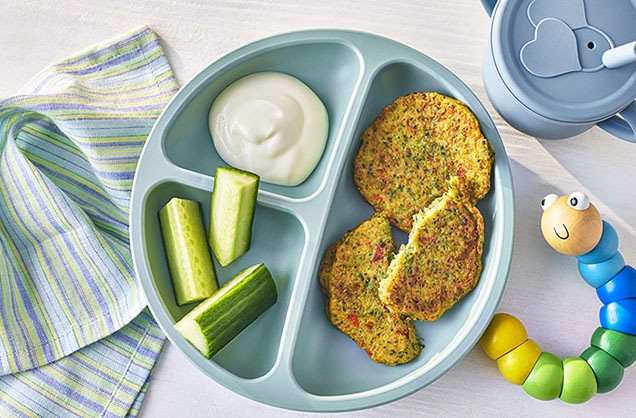
‘Weaning while out and about might feel like another thing to juggle, but there are different ways to approach it. Try to prepare food before heading out, pack up a few easy-to-offer finger foods, such as bananas, avocado, soft fruit or pre-cooked pasta pieces. If you have more time to prep ahead, you could make some broccoli fritters and chickpea and squash houmous.
‘This is where ready-made baby food pouches can be occasionally useful, just remember to use a soft baby spoon rather than allowing your baby to suck from the pouch.’
Mealtimes feel stressful. How can I make them more fun and enjoyable?
‘I often encourage parents to shift the focus from how much food your baby is eating (or ignoring!) towards the experience itself. You may find changing the environment helpful, for example, having some gentle music in the background, and eating with your baby. You might also talk about something other than the food.
‘Keeping meals short, before frustration or worry sets in, can also be helpful – shorter, positive meals will nurture a more enjoyable routine.
‘Above all else, remember that there is no such thing as ‘perfect’ when it comes to mealtimes or progress during weaning. While it can be difficult, leaning into trusting your baby’s appetite and their individual progress can reduce mealtime stress. Consistency over time matters far more than a single meal, and a calm approach will support your baby’s skills, confidence and a positive relationship with food.’
The views expressed in this article are not necessarily those of Tesco. If your baby is experiencing any health problems, please contact your GP.